
Sarcopenia Treatment Market Size
| Study Period | 2019 – 2030 |
| Base Year For Estimation | 2024 |
| Market Size (2025) | USD 3.21 Billion |
| Market Size (2030) | USD 3.99 Billion |
| CAGR (2025 – 2030) | 4.48 % |
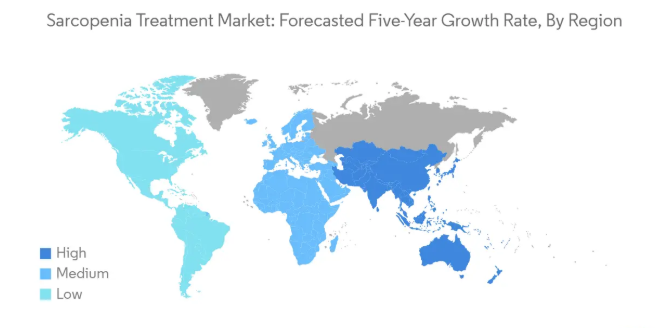
| Fastest Growing Market | Asia-Pacific |
| Largest Market | North America |
Major Players *Disclaimer: Major Players sorted in no particular order |


Sarcopenia Treatment Market Analysis
The Sarcopenia Treatment Market size is estimated at USD 3.21 billion in 2025, and is expected to reach USD 3.99 billion by 2030, at a CAGR of 4.48% during the forecast period (2025-2030).
The sarcopenia treatment landscape is experiencing significant transformation through advanced research and clinical developments. In May 2023, Biophytis submitted a Clinical Trials Authorization application to the European Medicines Agency to initiate a Phase III trial in sarcopenia treatment, marking a crucial step in therapeutic advancement. The research community has made substantial progress in understanding sarcopenia’s prevalence, with a 2023 study published in the BMC Musculoskeletal Disorders Journal revealing that sarcopenia affects between 10% and 82.1% of older adults, with higher prevalence in women than in men. This growing understanding has led to an increased focus on developing targeted therapeutic approaches and standardized treatment protocols.
The market is witnessing a surge in innovative product developments and strategic initiatives by key industry players. In March 2023, MrMed launched a mobile app for access to affordable super-specialty medicines and supplements, demonstrating the industry’s shift toward digital healthcare solutions. Additionally, in September 2023, the Centenary Institute and the University of Technology Sydney initiated a collaborative research program, the Dynamic Resilience program, to investigate the impact of hospitalization on muscle mass and strength loss. These developments reflect the industry’s commitment to addressing sarcopenia treatment through multiple therapeutic approaches and delivery mechanisms.
Healthcare infrastructure improvements and expanding access to treatment options are reshaping the market dynamics. According to recent studies published in the International Journal of Functional Nutrition, the worldwide prevalence of vitamin B12 deficiency ranges from 30% to 93%, highlighting the critical need for comprehensive nutritional interventions. The healthcare sector is responding through enhanced distribution networks and improved accessibility to treatment options, with retail pharmacies expanding their presence and online platforms gaining traction in delivering sarcopenia medication and muscle wasting treatment products.
The nutritional supplement segment is experiencing significant innovation and product diversification. Companies are developing specialized formulations targeting specific aspects of sarcopenia, incorporating advanced delivery systems and improved bioavailability. For instance, in January 2023, Reliance Retail announced plans to open over 2,000 standalone pharmacy stores, enhancing access to nutritional supplements and treatment options. This expansion in retail infrastructure, coupled with the development of specialized nutritional products, demonstrates the market’s evolution toward more comprehensive treatment approaches and improved patient accessibility to various therapeutic options in the sarcopenia treatment market.
Sarcopenia Treatment Market Trends
Increasing Geriatric Population
The remarkable increase in life expectancies and improved access to medical innovations has led to a significant proliferation of the geriatric population worldwide, creating a substantial driver for the sarcopenia treatment market. As people age, the rate at which body cells renew becomes slower, implying that aging adversely affects muscle strength and density. According to the World Population Prospects July 2022 report, the share of the global population aged 65 years or above is projected to rise from 10% in 2022 to 16% in 2050. Additionally, by 2050, the number of persons aged 65 years or over worldwide is projected to be more than twice the number of children under age five and about the same as that of children under age 12, indicating a significant demographic shift that will drive demand for sarcopenia treatment.
The increasing prevalence of sarcopenia among older adults further emphasizes the market’s growth potential. According to research published in March 2023 in BMC Musculoskeletal Disorders Journal, the prevalence of sarcopenia in older adults ranges from 10% to 82.1% and is higher in older women than in older men. In the Asia-Pacific region alone, an estimated 697 million older persons (60 years or over) resided in 2023, representing about 60% of all older persons globally. The region is experiencing a rapid demographic transition, with roughly one in seven persons currently being 60 years or older, and by 2050, this ratio is expected to increase to one in four persons, creating a substantial market for muscle wasting treatment.
Rise in Malnutrition and Vitamin Deficiency in Developing Countries
The increasing prevalence of malnutrition and vitamin deficiency in developing countries has emerged as a critical driver for the frailty treatment market, as these conditions significantly contribute to muscle weakness and loss. According to the November 2023 update by the World Health Organization, approximately 7.3 million children globally received severe acute malnutrition (SAM) treatment in 2022, highlighting the widespread nature of nutritional deficiencies. This situation is particularly concerning as malnutrition during early stages of life can lead to long-term complications, including an increased risk of sarcopenia development. Furthermore, according to research published in November 2022 in the International Journal of Functional Nutrition, the worldwide prevalence of vitamin D deficiency ranges from 30% to 93%, with females showing particularly low levels of serum 25(OH)D, averaging 14.05±7.55 ng/ml.
Various initiatives are being implemented to address these nutritional challenges, which in turn support the growth of the anabolic treatment market. For instance, in September 2023, India’s Ministry of Women and Child Development celebrated the 6th Rashtriya Poshan Maah, focusing on comprehensively tackling malnutrition through a life-cycle approach under Mission Poshan 2.0. The initiative aims to cultivate widespread awareness concerning critical human life stages: pregnancy, infancy, childhood, and adolescence, with a theme centered on ‘Suposhit Bharat, Sakshar Bharat, Sashakt Bharat’ (Nutrition-rich India, Educated India, Empowered India). Such programs not only address immediate nutritional needs but also help prevent future complications related to muscle weakness and sarcopenia, driving the demand for preventive and therapeutic interventions in the frailty treatment market.
Segment Analysis: By Treatment Type
Vitamin D and Calcium Supplement Segment in Sarcopenia Treatment Market
The Vitamin D and Calcium Supplement segment maintains its dominant position in the sarcopenia treatment market, commanding approximately 37% of the total market share in 2024. This segment’s leadership is primarily attributed to the increased adoption of these supplements and their proven benefits in sarcopenia treatment. Healthcare providers increasingly recognize the crucial role of vitamin D and calcium supplementation in maintaining muscle strength and bone density, particularly among elderly patients. The segment’s growth is further supported by rising awareness about the importance of vitamin D and calcium in preventing age-related muscle loss and improving muscle function. Additionally, the widespread availability of these supplements through various distribution channels and their relatively lower cost compared to other treatment options contribute to their market dominance.

Vitamin B12 Supplement Segment in Sarcopenia Treatment Market
The Vitamin B12 Supplement segment is emerging as the fastest-growing segment in the sarcopenia treatment market, with a projected growth rate of approximately 6% from 2024 to 2029. This remarkable growth trajectory is driven by increasing recognition of Vitamin B12’s crucial role in muscle health and function. The segment’s expansion is supported by growing research evidence linking Vitamin B12 deficiency to muscle weakness and sarcopenia, particularly in elderly populations. Healthcare professionals are increasingly recommending Vitamin B12 supplementation as part of comprehensive muscle strength therapy protocols. The segment’s growth is further bolstered by technological advancements in supplement formulations, improved bioavailability of Vitamin B12 products, and increasing consumer awareness about the importance of B12 in maintaining muscle mass and strength.
Remaining Segments in Treatment Type
The Protein Supplement segment plays a vital role in the sarcopenia treatment market, offering essential nutritional support for muscle maintenance and growth. This segment is characterized by innovative product formulations and increasing adoption of protein supplementation in elderly care protocols. The Others segment, which includes various emerging treatment options such as hormone therapies and specialized nutritional supplements, represents a smaller but significant portion of the market. These segments collectively contribute to the diverse treatment options available for sarcopenia management, providing healthcare providers with a comprehensive range of therapeutic choices tailored to individual patient needs and conditions, including muscle regeneration therapy and anabolic treatment.
Segment Analysis: By Distribution Channel
Retail Pharmacies Segment in Sarcopenia Treatment Market
The retail pharmacies segment dominates the sarcopenia treatment market, commanding approximately 53% of the total market share in 2024. This significant market position is attributed to the segment’s extensive reach across tier I, tier II, and tier III cities, as well as small towns and villages. Independent pharmacists have maintained a competitive advantage in selling vitamins and nutritional supplements, leveraging their expertise in addressing basic biochemical concepts of vitamins and supplements. The segment’s growth is further supported by the expansion of retail pharmacy chains and their ability to provide easy access to sarcopenia treatment products. Major pharmacy chains are actively expanding their presence, with companies like CVS Pharmacy introducing innovative solutions such as the QuickServe Vitamin Dispensing System, enhancing accessibility to daily supplements and vitamins.
Online Pharmacies Segment in Sarcopenia Treatment Market
The online pharmacies segment is projected to experience the highest growth rate of approximately 5.4% during the forecast period 2024-2029. This accelerated growth is driven by several factors, including increased access to medications, competitive pricing compared to offline stores, greater convenience, and enhanced anonymity for consumers. The segment benefits from lower transaction and product costs, while offering additional advantages such as accessibility to people with limited mobility and those in remote areas. Online pharmacies have evolved to provide value-added services such as personalized medicine reminder services, doorstep delivery within short timeframes, and prescription validation through licensed pharmacists. The segment’s growth is further supported by the incorporation of advanced technologies and mobile applications by key players to improve customer experience in online medicine purchases.
Remaining Segments in Distribution Channel
The hospital pharmacies and other distribution channels continue to play vital roles in the sarcopenia treatment market. Hospital pharmacies serve as crucial points of distribution, particularly for patients requiring immediate access to supplements and treatments during hospital stays. These pharmacies maintain strong relationships with pharmaceutical companies to ensure the availability of required supplements at the earliest opportunity. The other distribution channels, including hypermarkets, supermarkets, drug stores, and clinic pharmacies, cater to diverse consumer preferences and provide additional accessibility options for sarcopenia treatment products, particularly in regions where traditional pharmacy access may be limited.
Sarcopenia Treatment Market Geography Segment Analysis
Sarcopenia Treatment Market in North America
The North American sarcopenia treatment market encompasses the United States, Canada, and Mexico, with each country contributing distinctly to the regional landscape. The region’s market is characterized by advanced healthcare infrastructure, high awareness of sarcopenia treatment among healthcare professionals, and increasing research and development activities. The presence of key market players and their continuous efforts to file and submit various sarcopenia-related treatment options further strengthens the market position. The region benefits from well-established distribution networks for nutritional supplements and pharmaceutical products, along with favorable healthcare policies supporting the treatment of age-related conditions.
Sarcopenia Treatment Market in the United States
The United States dominates the North American sarcopenia treatment market, accounting for approximately 87% of the regional market share in 2024. The country’s market leadership is driven by the rising geriatric population and increasing research and development for sarcopenia treatment. The Congressional Budget Office estimates that about 73 million people will be 65 years of age or older over the 2023–2053 period, creating a substantial patient pool. The country’s robust healthcare infrastructure, coupled with significant investments by the government to support sarcopenia treatment, further propels market growth. Various nutritional supplement product launches by key market players and the presence of advanced healthcare facilities contribute to the market’s prominence.
Sarcopenia Treatment Market in Canada
Canada emerges as the fastest-growing market in North America, with a projected growth rate of approximately 5% during 2024-2029. The country’s market is driven by the rising geriatric population along with the presence of sarcopenia cases across the country. The increasing research studies conducted by Canadian researchers demonstrate the utilization of various advanced supplements for sarcopenia treatment, offering opportunities for key players to expand their market presence. The country’s healthcare system’s focus on preventive care and management of age-related conditions, combined with increasing awareness about sarcopenia treatment among healthcare providers, supports market growth. Additionally, the high prevalence of type 2 diabetes in the population contributes to market expansion, as diabetes is a significant risk factor for sarcopenia.
Sarcopenia Treatment Market in Europe
The European sarcopenia treatment market encompasses key countries including Germany, the United Kingdom, France, Italy, and Spain. The region’s market is characterized by advanced healthcare systems, significant research initiatives, and growing awareness about age-related muscle loss conditions. The presence of major pharmaceutical companies and research institutions conducting studies on sarcopenia treatment contributes to market development. The region’s strong focus on elderly care and well-established healthcare infrastructure supports the adoption of various treatment options. The market benefits from collaborative research efforts between academic institutions and industry players, leading to innovative treatment approaches.
Sarcopenia Treatment Market in Germany
Germany leads the European sarcopenia treatment market, holding approximately 21% of the regional market share in 2024. The country’s market dominance is supported by its advanced healthcare infrastructure and high healthcare spending. According to Statistics Germany, 16.5 million people were aged 60 and above in 2023, creating a substantial patient base for sarcopenia treatment. The country’s strong focus on research and development, coupled with the presence of major pharmaceutical companies, drives market growth. The well-established reimbursement policies and healthcare access further contribute to market expansion.
Sarcopenia Treatment Market in France
France demonstrates the highest growth potential in the European region, with an expected growth rate of approximately 6% during 2024-2029. The country’s market is driven by its aging population and the prevalence of associated diseases, including cancer and vitamin deficiency, which are more likely to cause sarcopenia. The French healthcare system’s emphasis on preventive care and management of age-related conditions supports market growth. The country’s strong research infrastructure and government initiatives, such as the Health Innovation 2030 plan, contribute to market expansion. The presence of major pharmaceutical companies and research institutions further strengthens the market position.
Sarcopenia Treatment Market in Asia-Pacific
The Asia-Pacific sarcopenia treatment market encompasses major economies including China, Japan, India, Australia, and South Korea. The region demonstrates significant market potential due to its large elderly population and increasing healthcare awareness. The market is characterized by growing healthcare infrastructure, rising investment in research and development, and increasing adoption of nutritional supplements. The presence of both international and local pharmaceutical companies, coupled with growing healthcare expenditure across major economies, contributes to market development. The region’s focus on traditional medicine alongside modern sarcopenia treatment approaches creates unique market opportunities.
Sarcopenia Treatment Market in China
China leads the Asia-Pacific sarcopenia treatment market, driven by its large elderly population and increasing healthcare expenditure. The country’s market leadership is supported by the implementation of healthcare initiatives such as “Healthy China 2030,” which focuses on disease prevention and timely diagnosis. The growing awareness about age-related conditions and the expansion of healthcare infrastructure in both urban and rural areas contribute to market growth. The presence of both domestic and international pharmaceutical companies, along with increasing research activities in sarcopenia treatment, strengthens the market position.
Sarcopenia Treatment Market in India
India emerges as the fastest-growing market in the Asia-Pacific region, driven by its rapidly aging population and increasing healthcare awareness. The country’s market growth is supported by rising healthcare expenditure and the development of healthcare infrastructure. The presence of major pharmaceutical companies and research institutions conducting studies on sarcopenia treatment contributes to market expansion. The growing focus on preventive healthcare and increasing adoption of nutritional supplements further drives market growth. The country’s large patient pool and improving healthcare access create significant opportunities for market development.
Sarcopenia Treatment Market in the Middle East & Africa
The Middle East & Africa sarcopenia treatment market, comprising regions such as GCC countries and South Africa, demonstrates growing potential in the global landscape. The market is characterized by improving healthcare infrastructure, increasing awareness about age-related conditions, and rising healthcare expenditure. Among the countries in this region, GCC emerges as the largest market, while South Africa shows the fastest growth potential. The region’s focus on developing healthcare facilities and increasing adoption of advanced sarcopenia treatment options contributes to market expansion. The growing burden of lifestyle diseases and increasing geriatric population further drive market growth. Various healthcare initiatives and improving access to medical facilities support market development across the region.
Sarcopenia Treatment Market in South America
The South American sarcopenia treatment market, led by countries such as Brazil and Argentina, shows promising growth potential in the global landscape. The region’s market is characterized by improving healthcare infrastructure and increasing awareness about age-related conditions. Brazil emerges as the largest market in the region, while also demonstrating the fastest growth potential. The market benefits from increasing healthcare expenditure and growing research activities in sarcopenia treatment. The presence of both international and local pharmaceutical companies contributes to market development. The region’s focus on improving healthcare access and increasing adoption of nutritional supplements supports market growth. Various government initiatives aimed at enhancing healthcare infrastructure and services further drive market expansion across the region.
Sarcopenia Treatment Industry Overview
Top Companies in Sarcopenia Treatment Market
The sarcopenia treatment market features established pharmaceutical and healthcare companies, including Haleon Group, Nestlé SA, Sanofi SA, Bayer AG, Novartis AG, Zydus Life Sciences, and Eli Lilly and Company, leading the competitive landscape. These companies are actively pursuing product innovation through increased research and development activities in gene therapy, stem cell treatments, and novel drug formulations targeting muscle health. Strategic partnerships and collaborations with research institutions and technology companies are being leveraged to enhance diagnostic capabilities and treatment efficacy. Companies are expanding their geographical presence while simultaneously strengthening their distribution networks across hospital pharmacies, retail pharmacies, and online channels. The focus remains on developing comprehensive treatment solutions combining pharmaceuticals, nutritional supplements, and personalized medicine approaches to address the complex nature of sarcopenia treatment.
Consolidated Market with Strong Regional Players
The sarcopenia treatment market exhibits a moderately consolidated structure with global pharmaceutical conglomerates holding significant market share through their established product portfolios and extensive distribution networks. These major players benefit from their diverse product offerings spanning pharmaceuticals, vitamins, minerals, and nutritional supplements, allowing them to provide comprehensive treatment solutions. Regional and local players maintain competitive positions in specific geographical markets through specialized product offerings and strong relationships with healthcare providers and distribution partners.
The market is characterized by strategic mergers and acquisitions aimed at expanding product portfolios and strengthening market presence across different regions. Companies are increasingly focusing on acquiring innovative startups and biotechnology firms developing novel treatment approaches for sarcopenia. This consolidation trend is particularly evident in emerging markets where established players are seeking to enhance their market penetration through local partnerships and acquisitions of regional distribution networks.
Innovation and Market Access Drive Growth
Success in the sarcopenia treatment market increasingly depends on companies’ ability to develop innovative treatment solutions while ensuring widespread market access. Incumbent players must focus on continuous product innovation through investment in research and development, particularly in areas such as personalized medicine and combination therapies. Building strong relationships with healthcare providers, maintaining robust supply chains, and leveraging digital technologies for patient engagement and treatment monitoring are becoming crucial factors for maintaining market leadership. Companies must also adapt to evolving regulatory requirements while ensuring the cost-effectiveness of their treatment solutions.
New entrants and emerging players can gain market share by focusing on niche segments and developing specialized treatment solutions for specific patient populations. Success factors include establishing strategic partnerships with established players for distribution and market access, investing in clinical trials to demonstrate treatment efficacy, and leveraging technological innovations for improved diagnosis and treatment monitoring. The increasing focus on preventive healthcare and growing awareness about sarcopenia among healthcare providers and patients presents opportunities for companies to develop early intervention solutions and educational programs. Regulatory support for novel treatment approaches and increasing healthcare expenditure in emerging markets further enhance growth prospects for market participants.
Sarcopenia Treatment Market Leaders
-
- Bayer AG
- Nestle Health Science
- Sanofi S.A.
- Haleon Group of Companies
- Novartis AG
- Zydus Life Sciences Limited
- Eli Lilly and Company
- *Disclaimer: Major Players sorted in no particular order

Sarcopenia Treatment Market News
- July 2023: Biophytis filed for approval from the US Food and Drug Administration (FDA) to launch SARA-31, which is likely to be the first Phase III study in sarcopenia. SARA-31 is expected to evaluate the efficacy and safety of Sarconeos (BIO101) in treating sarcopenic patients at risk of mobility disability.
- February 2023: University College Dublin initiated a clinical trial to study the efficacy of a 12-week resistance exercise program with or without an oral nutritional supplement on the nutritional status of community-dwelling older adults who receive home care and are at risk of malnutrition and sarcopenia.
Sarcopenia Treatment Market Report – Table of Contents
1. INTRODUCTION
- 1.1 Study Assumptions and Market Definition
- 1.2 Scope of the Study
2. RESEARCH METHODOLOGY
3. EXECUTIVE SUMMARY
4. MARKET DYNAMICS
- 4.1 Market Overview
- 4.2 Market Drivers
- 4.2.1 Increasing Geriatric Population
- 4.2.2 Rise in Malnutrition and Vitamin Deficiency in Developing Countries
- 4.3 Market Restraints
- 4.3.1 Non-availability of New Drugs
- 4.4 Porter’s Five Forces Analysis
- 4.4.1 Bargaining Power of Suppliers
- 4.4.2 Bargaining Power of Buyers/Consumers
- 4.4.3 Threat of New Entrants
- 4.4.4 Threat of Substitute Products
- 4.4.5 Intensity of Competitive Rivalry
5. MARKET SEGMENTATION (Market Size by Value – USD)
- 5.1 By Treatment Type
- 5.1.1 Protein Supplements
- 5.1.2 Vitamin B12 Supplements
- 5.1.3 Vitamin D and Calcium Supplements
- 5.1.4 Other Treatment Types
- 5.2 By Distribution Channel
- 5.2.1 Hospital Pharmacies
- 5.2.2 Retail Pharmacies
- 5.2.3 Online Pharmacies
- 5.2.4 Other Distribution Channels
- 5.3 Geography
- 5.3.1 North America
- 5.3.1.1 United States
- 5.3.1.2 Canada
- 5.3.1.3 Mexico
- 5.3.2 Europe
- 5.3.2.1 Germany
- 5.3.2.2 United Kingdom
- 5.3.2.3 France
- 5.3.2.4 Italy
- 5.3.2.5 Spain
- 5.3.2.6 Rest of Europe
- 5.3.3 Asia-Pacific
- 5.3.3.1 China
- 5.3.3.2 Japan
- 5.3.3.3 India
- 5.3.3.4 Australia
- 5.3.3.5 South Korea
- 5.3.3.6 Rest of Asia-Pacific
- 5.3.4 Middle East &Africa
- 5.3.4.1 GCC
- 5.3.4.2 South Africa
- 5.3.4.3 Rest of Middle East & Africa
- 5.3.5 South America
- 5.3.5.1 Brazil
- 5.3.5.2 Argentina
- 5.3.5.3 Rest of South America
6. COMPETITIVE LANDSCAPE
- 6.1 Company Profiles
- 6.1.1 Nestle Health Science
- 6.1.2 Sanofi SA
- 6.1.3 Bayer AG
- 6.1.4 Novartis AG
- 6.1.5 Zydus Life Sciences Limited
- 6.1.6 Eli Lilly and Company
- 6.1.7 Haleon Group of Companies
- *List Not Exhaustive
7. MARKET OPPORTUNITIES AND FUTURE TRENDS
Sarcopenia Treatment Industry Segmentation
Sarcopenia is a term used to describe the loss of muscle mass, strength, and function associated with aging. Currently, there are no FDA-approved medications for the treatment of sarcopenia. The effects of exercise and nutritional supplementation on patients with sarcopenia have been examined in numerous studies. The sarcopenia treatment market is segmented by treatment type, distribution channel, and geography. Based on the treatment type, the market is segmented into protein supplements, vitamin B12 Supplements, vitamin D and calcium supplements, and other treatment types. Other treatment types include cell therapy, gene therapy, and hormone therapy. By distribution channel, the market is segmented by hospital pharmacies, retail pharmacies, online pharmacies, and other distribution channels. Other distribution channels include hypermarkets, supermarkets, clinic pharmacies, and drug stores. The report also covers the market sizes and forecasts for the sarcopenia treatment market in major countries across different regions.
For each segment, the market size is provided in terms of value (USD).
| By Treatment Type | Protein Supplements | ||
| Vitamin B12 Supplements | |||
| Vitamin D and Calcium Supplements | |||
| Other Treatment Types | |||
| By Distribution Channel | Hospital Pharmacies | ||
| Retail Pharmacies | |||
| Online Pharmacies | |||
| Other Distribution Channels | |||
| Geography | North America | United States | |
| Canada | |||
| Mexico | |||
| Europe | Germany | ||
| United Kingdom | |||
| France | |||
| Italy | |||
| Spain | |||
| Rest of Europe | |||
| Asia-Pacific | China | ||
| Japan | |||
| India | |||
| Australia | |||
| South Korea | |||
| Rest of Asia-Pacific | |||
| Middle East &Africa | GCC | ||
| South Africa | |||
| Rest of Middle East & Africa | |||
| South America | Brazil | ||
| Argentina | |||
| Rest of South America | |||
Sarcopenia Treatment Market Research FAQs
The Sarcopenia Treatment Market size is expected to reach USD 3.21 billion in 2025 and grow at a CAGR of 4.48% to reach USD 3.99 billion by 2030.
In 2025, the Sarcopenia Treatment Market size is expected to reach USD 3.21 billion.
Bayer AG, Nestle Health Science, Sanofi S.A., Haleon Group of Companies, Novartis AG, Zydus Life Sciences Limited and Eli Lilly and Company are the major companies operating in the Sarcopenia Treatment Market.
Asia-Pacific is estimated to grow at the highest CAGR over the forecast period (2025-2030).
In 2025, the North America accounts for the largest market share in Sarcopenia Treatment Market.
In 2024, the Sarcopenia Treatment Market size was estimated at USD 3.07 billion. The report covers the Sarcopenia Treatment Market historical market size for years: 2019, 2020, 2021, 2022, 2023 and 2024. The report also forecasts the Sarcopenia Treatment Market size for years: 2025, 2026, 2027, 2028, 2029 and 2030.
Sarcopenia Treatment Market Research
Our latest report examines various therapeutic approaches, including muscle wasting treatment options and anabolic treatment protocols. The analysis covers emerging sarcopenia medication developments and innovative frailty treatment strategies.
The report offers invaluable guidance for healthcare providers and pharmaceutical companies investing in therapeutic muscle regeneration and therapy for muscle strength programs. Our detailed analysis of the sarcopenia treatment market includes an assessment of the regulatory framework, technological advancements, and future growth opportunities. Stakeholders benefit from our data-driven insights, competitive landscape analysis, and strategic recommendations. These resources support informed decision-making in this rapidly evolving healthcare sector.