
Italy Road Freight Transport Market Size
| Study Period | 2017 – 2030 |
| Base Year For Estimation | 2024 |
| Forecast Data Period | 2025 – 2030 |
| Market Size (2025) | USD 39.83 Billion |
| Market Size (2030) | USD 47.38 Billion |
| CAGR (2025 – 2030) | 3.53 % |
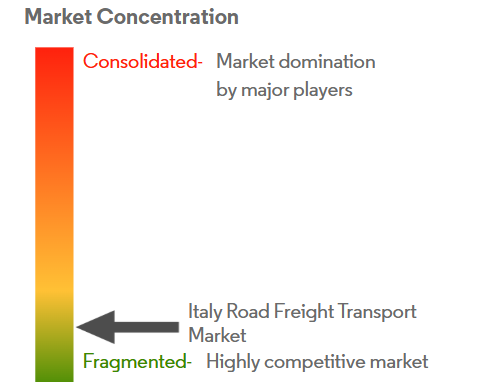
| Market Concentration | Low |
Major Players
*Disclaimer: Major Players sorted in no particular order |
Italy Road Freight Transport Market Analysis
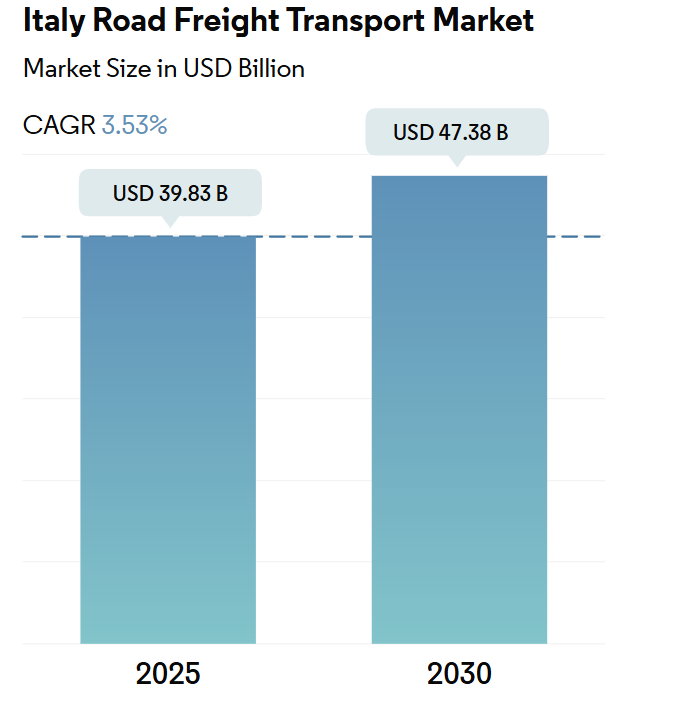
The Italy Road Freight Transport Market size is estimated at 39.83 billion USD in 2025, and is expected to reach 47.38 billion USD by 2030, growing at a CAGR of 3.53% during the forecast period (2025-2030).
Italy’s road transport sector is undergoing significant transformation driven by substantial infrastructure investments and modernization initiatives. In 2024, the country embarked on constructing the world’s longest suspension bridge, featuring a 3,300m suspended span and designed to accommodate three lanes for vehicular traffic in each direction along with a central rail lane. The government has outlined comprehensive infrastructure development plans worth USD 280 billion extending up to 2032, demonstrating a strong commitment to enhancing the nation’s transportation network. This commitment is further evidenced by the European Investment Bank’s announcement in 2023 to provide USD 800.61 million for modernizing the Autostrade Alto Adriatico motorway, which serves as a crucial connection between Eastern and Western Europe.
The sector is witnessing a notable shift toward sustainable transportation solutions and fleet modernization. In 2023, Italy recorded a significant increase in electric truck adoption, with 72 new registrations representing a 323% increase from the previous year. This trend toward sustainability is further exemplified by Lannutti Group’s recent order of 1,500 Volvo FH Aero trucks, most of which will operate on Hydrotreated Vegetable Oil (HVO), potentially reducing CO2 emissions by up to 90%. The government has also announced plans to invest USD 2.7 billion in road improvement projects to enhance vital bridge and motorway links, focusing on driver safety and operational efficiency.
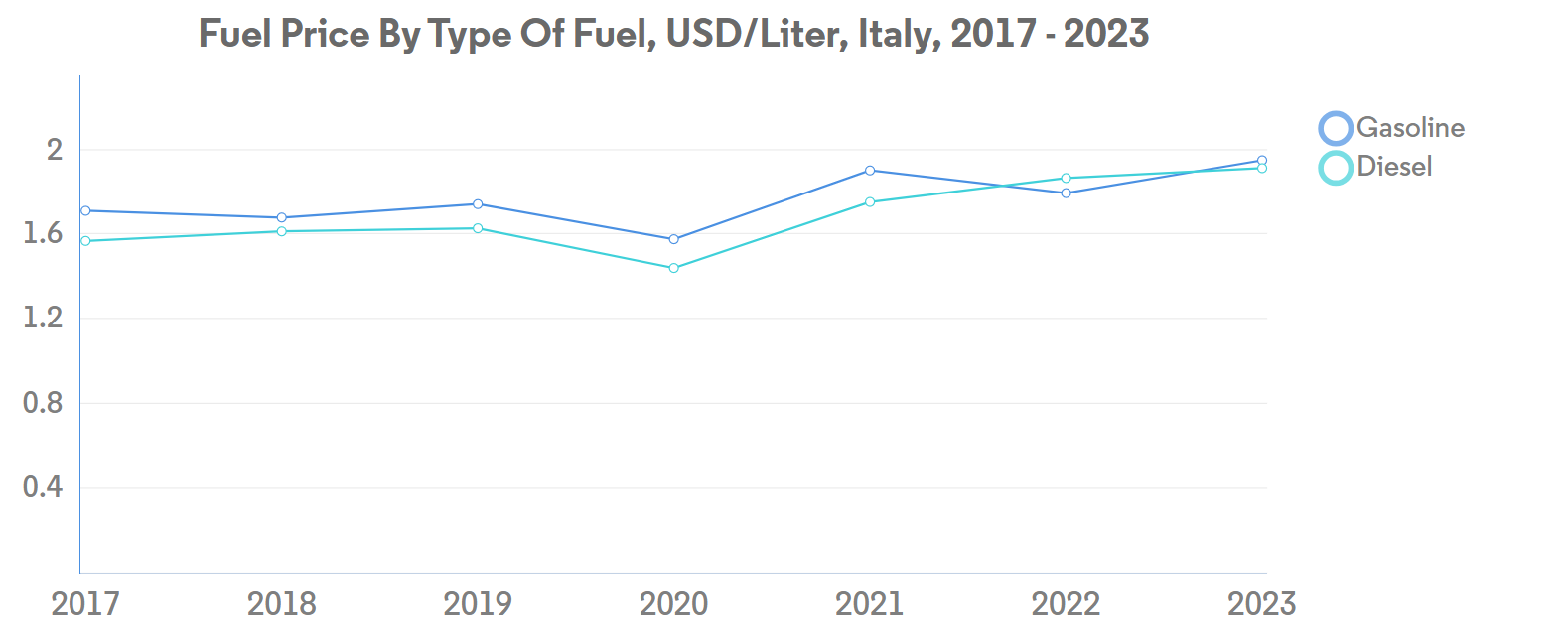
The industry’s operational landscape is evolving with road transport in Italy accounting for 87.81% of total transportation in 2022, highlighting its dominant role in the country’s logistics framework. A new highway project worth USD 1.41 billion, scheduled for completion by 2026, will enhance connectivity between the A2 Autostrade Mediterraneo on Italy’s west coast and the A14 Highway on the east coast, promising to streamline freight movement across the country. Additionally, the government’s October 2023 announcement of a USD 12.8 billion investment to construct a bridge connecting Sicily to the mainland demonstrates its commitment to improving cross-regional connectivity.
The sector’s growth is closely tied to broader economic performance and trade activities. Italy’s position as the second-largest manufacturing country in Europe has strengthened its road freight transport sector, with manufacturing exports experiencing a remarkable 17.9% year-over-year growth in 2022. The retail sector has also shown robust performance, with total retail sales value growing by 4.6% in 2022 compared to the previous year. These positive indicators in key economic sectors have directly contributed to increased demand for road freight services, particularly for both domestic distribution and international trade routes. The transport market in Italy is poised for continued growth, supported by these economic drivers and infrastructure enhancements.
Italy Road Freight Transport Market Trends
Growing future prospects due to planned overhaul of superheavy cargo transport fleet by 2026 in Italy
- In July 2024, the Italian Ministry of Transport greenlit a project to establish a rail freight station in Piacenza, strategically placed between Milan and Bologna. The upcoming station will be situated in the eastern part of Piacenza, specifically in the Le Mose area. Moreover, Le Mose already hosts the Piacenza Intermodal Terminal, overseen by Hupac. This existing terminal is currently undergoing significant enhancements, with completion slated for late 2024 or early 2025. These developments paint a promising future for Piacenza’s rail freight prospects.
- In 2024, Italy plans to upgrade its superheavy cargo transport fleet due to poor conditions and failure to meet EU standards. Shippers and carriers are urging the government to implement a public incentive plan amid challenges from the Russian-Ukrainian conflict and stricter EU regulations. The plan requires a USD 747.24 million investment by 2026 to phase out 25-30% of the oldest, most polluting, and least safe vehicles over three years. Italy’s support for the freight sector has lagged behind France and Germany, but changes are expected as early as late 2024.
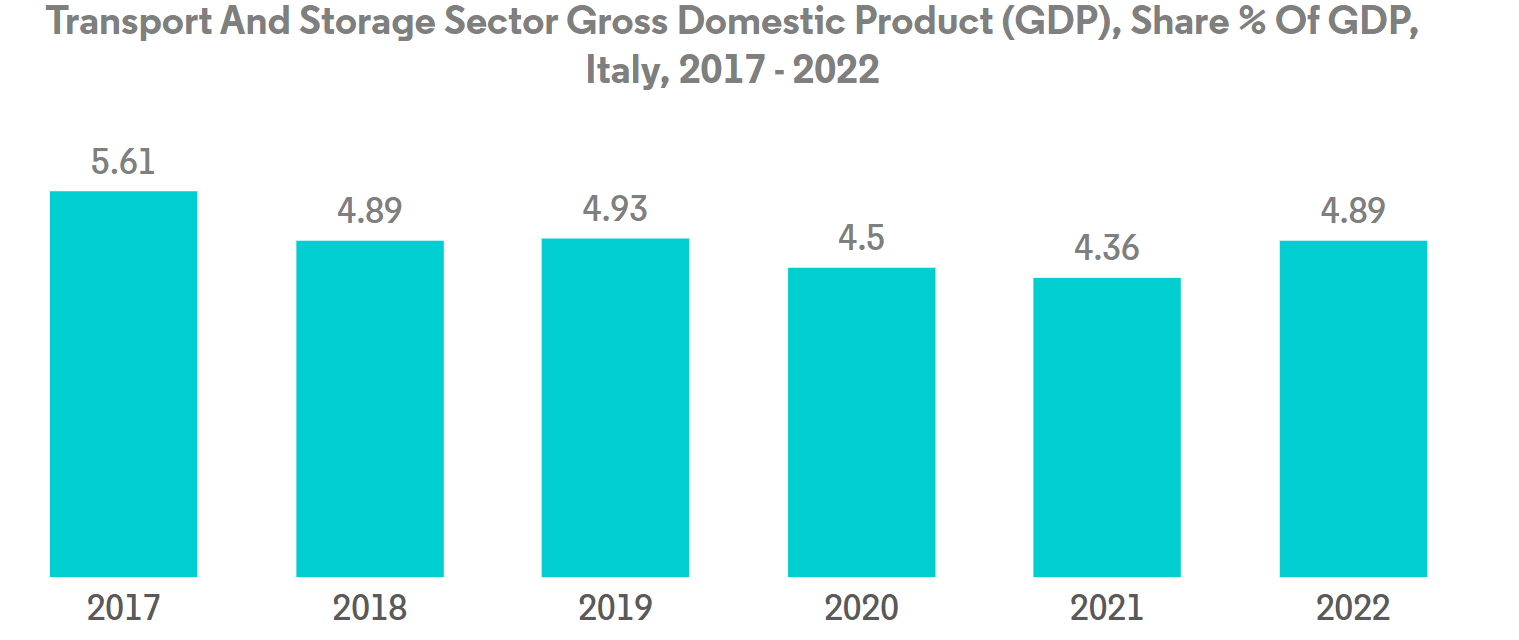
Fuel prices surged in Italy after the discount on fuel-related excise duties expired at the end of 2022
- For the last three years, Italy has consistently held the record for the highest average wholesale power prices among major European markets. This is primarily due to its heavy reliance on natural gas for electricity generation, a strategy that sets it apart from its European counterparts. In 2023, Italy’s wholesale power prices stood at an average of USD 137.80 per megawatt hour, a figure that was a third higher than both Germany’s and France’s averages, and over 50% more than Spain’s. Moving into 2024, Italy’s power costs have continued to surge, with recent wholesale prices sitting nearly 40% above France’s and a striking 60% higher than Spain’s.
- As of March 2024, Italy’s power and gas regulator, Arera, has increased the maximum payments in capacity auctions for 2025-2027 to USD 86,466.7/MW for new capacity. Previous auctions for 2022-2024 offered maximum payments of USD 74,724.3/MW for new capacity and USD 35,227.2/MW for existing capacity, payable over 15 years. In coming years, Italian power demand will rise due to increased electrification from electric vehicles, heat pumps, and electrolyzers.
OTHER KEY INDUSTRY TRENDS COVERED IN THE REPORT
- Italy is expected to boost domestic chip manufacturing with investments of over USD 4 billion by 2030
- Italy’s e-commerce market grew over 13% YoY in 2023, showing rapid expansion
- Italy secures 19th ranking in 2023 LPI due to strong trade infrastructure and competence in logistics services
- Italian exports are set to rise due to lower inflation and improved global conditions
- Fuel prices, along with rising driver wages due to shortage of truck drivers, are impacting the trucking operational cost in Italy
- Italy opposed EU truck emission reductions due to feasibility and economic concerns
- Growing driver shortages, toll rates along with rising cross border transport prices influencing overall road freight costs
- Italy inflation dropped significantly since 2022 and has the lowest inflation rate in Europe region as of 2024
- The construction and manufacturing sectors recorded highest growth during 2017-2023
- Italy’s “Piano Transizione 4.0” boosts AM tech with USD 14 billion tax credits, widening subsidies
- Italy’s infrastructure investment of more than USD 80 billion up to 2032 largely focuses on road improvements and infrastructure advancements
- Italy aims to phase out Russian LNG imports amid deals with African countries
- Italian truck market rebounded strongly in April 2024, led by heavy vehicle segment growth
- Growing trade volumes, infrastructure construction and electric truck adoption, leading to growing road tonnage
- The Italian government is expected to shift its focus toward rail freight by investing more than USD 117 billion over the next 10 years
Segment Analysis: End User Industry
Manufacturing Segment in Italy Road Freight Transport Market
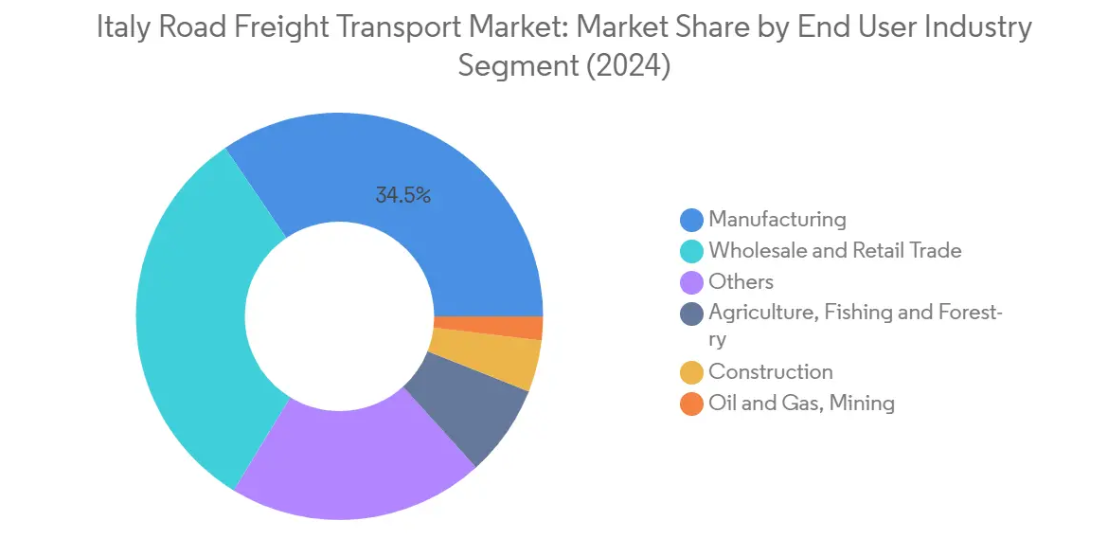
The manufacturing segment dominates the Italian road transport market, commanding approximately 35% market share in 2024, driven by Italy’s position as the second-largest manufacturing country in Europe. The segment’s strength is particularly evident in machinery, automotive parts, and pharmaceutical manufacturing. In 2024, revenues of Italian manufacturing companies are projected to reach record levels, supported by robust export growth across various manufacturing sectors. The manufacturing sector’s business climate shows positive indicators, particularly in employment components, reflecting optimism among companies regarding future business conditions. Italy’s recent discussions with various automotive companies, including Tesla and Chinese manufacturers, to expand its domestic automotive sector and reach an annual production goal of 1.3 million vehicles further reinforce the segment’s dominance in the transport market.
Manufacturing Segment Growth in Italy Road Freight Transport Market
The manufacturing segment is projected to maintain its strong growth trajectory, with an expected growth rate of approximately 4% during 2024-2029. This growth is being driven by several key factors, including Italy’s “Piano Transizione 4.0,” an advanced manufacturing incentive plan that has allocated USD 14.3 billion for tax credits supporting investments in capital goods, intangible assets, R&D, innovation, and training. The plan expands on previous initiatives by widening eligibility and enhancing subsidies for intangible investments with increased credit percentages and maximum investment amounts. Additionally, Italy’s plans to invest USD 4.6 billion to boost domestic chip manufacturing by 2030 and the ongoing government support for manufacturing digitalization are expected to further accelerate the segment’s growth in the road transport market.
Remaining Segments in End User Industry
The other significant segments in the Italian road freight transport market include wholesale and retail trade, agriculture, fishing and forestry, construction, and oil and gas sectors. The wholesale and retail trade segment benefits significantly from the growing e-commerce sector and expanding retail infrastructure. The agriculture, fishing, and forestry segment maintains steady demand due to Italy’s strong agricultural production and food processing industry. The construction sector’s contribution is bolstered by government-funded infrastructure projects and European Union recovery funds, while the oil and gas segment plays a crucial role in energy resource transportation. Each of these segments contributes uniquely to the market’s dynamics, influenced by specific industry trends, regulatory frameworks, and economic conditions.
Segment Analysis: Destination
Domestic Segment in Italy Road Freight Transport Market
The domestic segment continues to dominate the Italian road freight transport market, accounting for approximately 64% of the total market value in 2024. This significant market share is driven by Italy’s robust internal logistics network and strong domestic industrial base. The manufacturing sector, being the second-largest in Europe, generates substantial domestic freight movement. Additionally, the growth in e-commerce and retail sectors has intensified last-mile delivery requirements within the country. The government’s commitment to infrastructure development, including a USD 2.7 billion investment in road improvement works to upgrade about 23,000 bridges and motorway connections, is further strengthening domestic freight operations. The sector’s dominance is also supported by the fact that about 80% of truck movements in Italy are less than 200 km, and 90% are less than 300 km on average, with the northern regions like Lombardy, Emilia-Romagna, and Veneto generating the maximum road traffic.
International Segment in Italy Road Freight Transport Market
The international segment is emerging as the fastest-growing segment in the Italian road freight transport market between 2024-2029. This growth is being propelled by Italy’s strategic geographical position and its role as a crucial freight hub, with four TEN-T networks crossing the country. The segment’s expansion is further supported by significant infrastructure developments, including the European Investment Bank and Cassa Depositi e Prestiti’s joint funding of EUR 750 million for modernizing the Autostrade Alto Adriatico motorway connecting Eastern and Western Europe. Cross-border e-commerce is playing a pivotal role in driving this growth, with 67% of Italian consumers making purchases from foreign websites. The segment is also benefiting from increasing bilateral connectivity with countries like Spain, China, and Egypt, while new infrastructure projects like the EUR 1.33 billion highway connecting the A2 Autostrade Mediterraneo and A14 Highway are expected to further boost international freight movement.
Segment Analysis: Truckload Specification
Full-Truck-Load (FTL) Segment in Italy Road Freight Transport Market
The Full-Truck-Load Italy (FTL) segment dominates the Italian road freight transport market, commanding approximately 82% of the total market value in 2024. Major market players providing FTL services include Girteka, TTS Transport, FERCAM, RAFFADALI, and Arcese, who collectively contribute to this segment’s substantial market presence. The segment’s dominance is particularly evident in the transportation of construction machinery, which saw a 5% year-over-year increase in sales during the first quarter of 2023, as well as in agri-food exports, which recorded a significant growth of 15.3% year-over-year in 2022. The strength of the FTL segment is further reinforced by Italy’s adoption of various economic initiatives, including Agriculture 4.0 for innovation in the agriculture sector and Piano Transizione 4.0 in the manufacturing sector, which continue to generate sustained demand for FTL services across the country.
Less-than-Truck-Load (LTL) Segment in Italy Road Freight Transport Market
The Less-than-Truck-Load (LTL) segment is emerging as the fastest-growing segment in the Italian road freight transport market, projected to grow at approximately 4% CAGR from 2024 to 2029. This growth is primarily driven by the surge in last-mile deliveries, aligned with the expansion in e-commerce revenue. The segment’s robust growth is supported by Italy’s high online consumer penetration rate of 75.1% as of January 2023. Small and medium-sized enterprises (SMEs), which account for nearly 80% of the industrial and service labor force and generate about two-thirds of turnover and value addition, are the primary users of LTL services. The segment’s growth trajectory is further strengthened by various policy initiatives targeting specific SME groups, including legislation for innovative start-ups and the “Transition 4.0” Plan for enterprise digitalization, which are expected to continue driving demand for LTL services in the coming years.
Segment Analysis: Containerization
Non-Containerized Segment in Italy Road Freight Transport Market
The non-containerized segment dominates the Italian road freight transport market, commanding approximately 86% of the total market value in 2024. This substantial market share is primarily driven by industries such as construction and wholesale/retail trade, which heavily rely on non-containerized trucking services. The construction industry’s contribution of USD 94.56 billion to Italy’s GDP and the wholesale/retail trade sector’s robust growth have significantly boosted the demand for non-containerized transportation. To enhance vital bridge and motorway links, Italy has committed USD 2.7 billion for road improvement projects, which is expected to further strengthen the non-containerized trucking segment. The segment’s dominance is also reinforced by its versatility in handling various types of cargo, from construction materials to retail goods, making it the preferred choice for diverse industries across Italy.
Containerized Segment in Italy Road Freight Transport Market
The containerized segment is emerging as the fastest-growing segment in the Italian road freight transport market, projected to grow at approximately 4% annually from 2024 to 2029. This growth is being driven by several key developments in the sector. In November 2023, Ferrovie dello Stato Italiane (FS) and Mediterranean Shipping Company (MSC) signed an MoU to improve rail and sea connections across Italian and European ports, establishing a new joint venture called “NewCo” to expand freight transport logistics. The segment’s growth is further supported by increased demand for containerized transportation of pharmaceuticals, chemicals, lubricants, oils, and beverages. France remains the key foreign market for container exports from Italy, comprising 35% of total exports by value, followed by Spain and the United States. The expansion of inland transportation networks linking southern, central, and eastern Europe is also contributing to the segment’s robust growth trajectory.
Segment Analysis: Distance
Long Haul Segment in Italy Road Freight Transport Market
The long haul segment dominates the Italian road freight transport market, commanding approximately 73% market share in 2024, driven by robust international trade activities and cross-border commerce. The segment’s prominence is reinforced by significant infrastructure developments, including the European Investment Bank and Cassa Depositi e Prestiti’s joint funding of USD 800.61 million for modernizing the Autostrade Alto Adriatico motorway connecting Eastern and Western Europe. Additionally, a new highway project worth USD 1.41 billion, scheduled for completion by 2026, will enhance connectivity between the A2 Autostrade Mediterraneo on Italy’s west coast and the A14 Highway on the east coast. The segment is projected to grow at around 4% annually from 2024 to 2029, supported by increasing exports, which recorded a 13.70% year-over-year growth, while imports demonstrated a substantial 30.76% year-over-year increase in recent periods. The segment’s growth is further bolstered by the manufacturing sector’s strong performance, particularly in exports which experienced a 17.9% year-over-year growth, necessitating efficient long-distance transportation solutions.
Short Haul Segment in Italy Road Freight Transport Market
The short haul segment plays a vital role in facilitating local and regional distribution networks across Italy, with significant developments enhancing its operational efficiency. The segment is benefiting from substantial infrastructure investments, including major road upgrade initiatives in the Liguria and Puglia regions, with allocated budgets exceeding USD 11 billion and USD 789.94 million respectively. The modernization of the Naples-Salerno highway further strengthens regional connectivity and supports short-haul operations. Technological innovations are also driving the segment’s evolution, as exemplified by Poste Italiane’s renewed joint venture with Sennder Technologies to enhance freight transportation efficiency through automated technology and GPS-enabled truck navigation. The segment is also witnessing a transformation in sustainability practices, with major retailers and logistics companies increasingly adopting electric vehicles for regional deliveries, demonstrating the industry’s commitment to environmental stewardship while maintaining operational efficiency in short-distance freight transport.
Segment Analysis: Goods Configuration
Solid Goods Segment in Italy Road Freight Transport Market
The solid goods segment dominates Italy’s road freight transport market, commanding approximately 70% of the total market value in 2024. This substantial market share is primarily driven by Italy’s position as the second-largest manufacturing country in Europe, particularly strong in machinery, fashion items, and automotive parts exports. The country’s substantial investments in expansive infrastructure ventures are fueling a heightened need for road freight services tasked with transporting construction materials and machinery to project sites. In 2024, Sicily secured significant investments, with around USD 5.44 billion earmarked for various projects including road improvement works and infrastructure development. The machinery and transport equipment sector, a major import-export category, continues to contribute significantly to the solid goods transportation segment, with robust growth in both domestic and international trade activities.
Fluid Goods Segment in Italy Road Freight Transport Market
The fluid goods segment is projected to be the fastest-growing segment in the Italian road freight transport market between 2024 and 2029, with an expected growth rate of approximately 4%. This growth is primarily driven by Italy’s strategic initiatives to diversify its gas supply infrastructure, including the introduction of new floating storage and regasification units (FSRUs) for liquefied natural gas (LNG) imports. The country has allocated a substantial sum of USD 66.81 billion within its National Resilience and Recovery Plan (NRRP) to provide incentives for the growth of renewable energy initiatives, which is expected to boost fluid goods transportation. The segment’s growth is further supported by increasing oil consumption, which reached 58.4 million tons in recent years, generating a heightened requirement for road freight services essential for transporting these commodities. The ongoing energy transition and Italy’s commitment to becoming independent of Russian gas is expected to create additional opportunities for fluid goods transportation in the coming years.
Segment Analysis: Temperature Control
Non-Temperature Controlled Segment in Italy Road Freight Transport Market
The non-temperature-controlled trucking segment dominates the Italian road freight transport market, commanding approximately 95% of the total market value in 2024. This substantial market share is primarily driven by the diverse range of industries utilizing this service, particularly in the transportation of machinery, fashion items, and automotive parts. Italy’s position as the second-largest manufacturing country in Europe, with a strong focus on machinery production, fashion items, and automotive components, significantly contributes to this segment’s dominance. The Italian production of machine tools, robots, and automation systems has shown remarkable growth, with the United States, Germany, China, France, and Poland emerging as the main export markets for Italian products. The industrial sector, representing 16.6% of Italian GDP, maintains a strong export orientation, further solidifying the position of non-temperature-controlled trucking as the primary choice for freight transport in the country.
Temperature Controlled Segment in Italy Road Freight Transport Market
The temperature-controlled segment is emerging as the fastest-growing segment in the Italian road freight transport market, projected to grow at approximately 4% during 2024-2029. This growth is primarily driven by the increasing demands of the food and beverage sector, along with the expanding pharmaceutical industry. Italy’s pharmaceutical sector has established itself as a significant player, accounting for about 2% of global production, with 85% of production being exported. The growth in this segment is further supported by Italy’s position as one of the largest agricultural producers and food processors in the European Union, with the agricultural sector contributing about 2% to the GDP. The country’s strong focus on food exports, particularly to key markets like Germany and the United States, combined with the increasing need for temperature-sensitive pharmaceutical transportation, continues to drive the expansion of this segment.
Italy Road Freight Transport Industry Overview
Top Companies in Italy Road Freight Transport Market
The leading companies in the transport market are actively pursuing innovation and digital transformation initiatives to enhance their service offerings. Companies are investing significantly in sustainable practices, including the adoption of electric vehicles and green logistics solutions to reduce emissions. Strategic partnerships with technology firms are being formed to develop advanced software platforms and extend digital logistics services. Market players are expanding their geographical presence through new facility openings and warehouse expansions across Italy, particularly focusing on strategic locations near major transportation hubs. Companies are also investing in specialized services like temperature-controlled transport and last-mile delivery solutions to cater to evolving customer needs. The industry has witnessed substantial investments in fleet modernization and automation technologies to improve operational efficiency and service quality.
Mix of Global and Local Players
The Italian road transport market exhibits a fragmented competitive landscape with a mix of global logistics conglomerates and local specialized carriers. Global players like DB Schenker, DHL Group, and DSV leverage their extensive international networks and advanced technological capabilities to maintain strong market positions, while local players like Fercam SpA and Arcese Trasporti SpA compete through their deep understanding of regional markets and specialized service offerings. The market has witnessed significant consolidation activity through strategic acquisitions and partnerships, particularly among larger players seeking to expand their service portfolios and geographical coverage. Companies are increasingly focusing on vertical integration to offer end-to-end logistics solutions.
The competitive dynamics are characterized by the presence of both asset-heavy traditional carriers and asset-light logistics providers, each bringing unique strengths to the market. Global players are leveraging their extensive resources to invest in advanced technologies and sustainable practices, while local players are focusing on niche segments and regional expertise. The market has seen increased collaboration between established players and technology startups to enhance digital capabilities and service offerings. Cross-border partnerships and joint ventures are becoming more common as companies seek to strengthen their international presence and service capabilities.
Innovation and Sustainability Drive Future Success
Success in the Italian road freight transport market increasingly depends on companies’ ability to embrace technological innovation and sustainable practices while maintaining operational efficiency. Market leaders are investing in digital platforms, automation technologies, and advanced analytics to optimize route planning, improve asset utilization, and enhance customer experience. Companies focusing on specialized services and industry-specific solutions are gaining competitive advantages in high-value segments. The development of value-added services and customized logistics solutions is becoming crucial for maintaining market share. Integration of sustainable practices and investment in green technologies is emerging as a key differentiator for companies looking to secure long-term success.
For new entrants and smaller players, success lies in identifying and serving niche markets while building strong regional networks and customer relationships. Companies need to focus on developing specialized expertise in high-growth sectors such as e-commerce logistics and temperature-controlled transport. Investment in digital capabilities and sustainable practices is becoming essential for long-term viability. Strategic partnerships with technology providers and larger logistics companies can help smaller players access advanced capabilities and broader markets. Companies must also prepare for potential regulatory changes related to environmental standards and cross-border transportation while maintaining flexibility in their business models to adapt to changing market conditions. Additionally, companies looking to expand their road transport services from Italy must consider the evolving regulatory landscape and customer expectations.
Italy Road Freight Transport Market Leaders
-
- Arcese Trasporti SpA
- DACHSER
- Deutsche Bahn AG (including DB Schenker)
- DSV A/S (De Sammensluttede Vognmænd af Air and Sea)
- La Poste Group (including BRT)
- *Disclaimer: Major Players sorted in no particular order
Italy Road Freight Transport Market News
- August 2024: DSV inked a deal with Volvo Trucks, securing an order of 300 electric trucks. This transaction marked one of the most significant commercial orders for Volvo’s electric truck lineup. It was a pivotal move for DSV, aligning with their ambition to cut emissions and spearhead the green transition in transportation. Collaboratively, DSV and Volvo Trucks strategized the rollout of these 300 zero-emission electric trucks throughout DSV’s European operations. Additionally, the agreement encompassed 500 Volvo trucks equipped with fuel-efficient diesel and gas drivetrains.
- November 2023: UPS completed the acquisition of MNX Global Logistics (MNX). This acquisition bolstered UPS’s time-critical logistics capabilities, particularly benefiting healthcare clients across the US, Europe, and Asia. This positioned UPS Healthcare, along with its clinical trial logistics arm, Marken, to better cater to the surging demand in the healthcare sector. Leveraging MNX’s proficiency, UPS maintained its industry-leading global service for clients requiring urgent and temperature-sensitive logistics solutions.
- October 2023: UPS has announced the opening of three new logistics centers in the provinces of Bari, Taranto and Lecce, representing 10,000 m2 to support SMEs and Made in Italy exports in the south of the country.